
Introduction
Starting a business in Sri Lanka is an exciting opportunity, whether you’re launching a small local venture, an online business, or a larger company. However, before you begin operations, it is essential to properly register your business to ensure legal compliance and long-term success.
Sri Lanka has a structured registration system that is relatively straightforward when you understand the steps involved. This guide will walk you through how to register a business in Sri Lanka in 2026, including the types of businesses, required documents, costs, and useful tips.
🏢 Where to Register Your Business
Business registration in Sri Lanka is handled by the
Department of Registrar of Companies Sri Lanka
Depending on your business type, you may also need approvals from local authorities or municipal councils.
📊 Types of Business Structures in Sri Lanka
Before registering, you must decide the type of business structure that suits your needs.
1. Sole Proprietorship
Owned by one person
Easy to set up
Suitable for small businesses
2. Partnership
Owned by two or more individuals
Shared responsibilities and profits
3. Private Limited Company
Separate legal entity
Limited liability protection
Suitable for growing businesses
4. Public Limited Company
Can offer shares to the public
More complex regulations
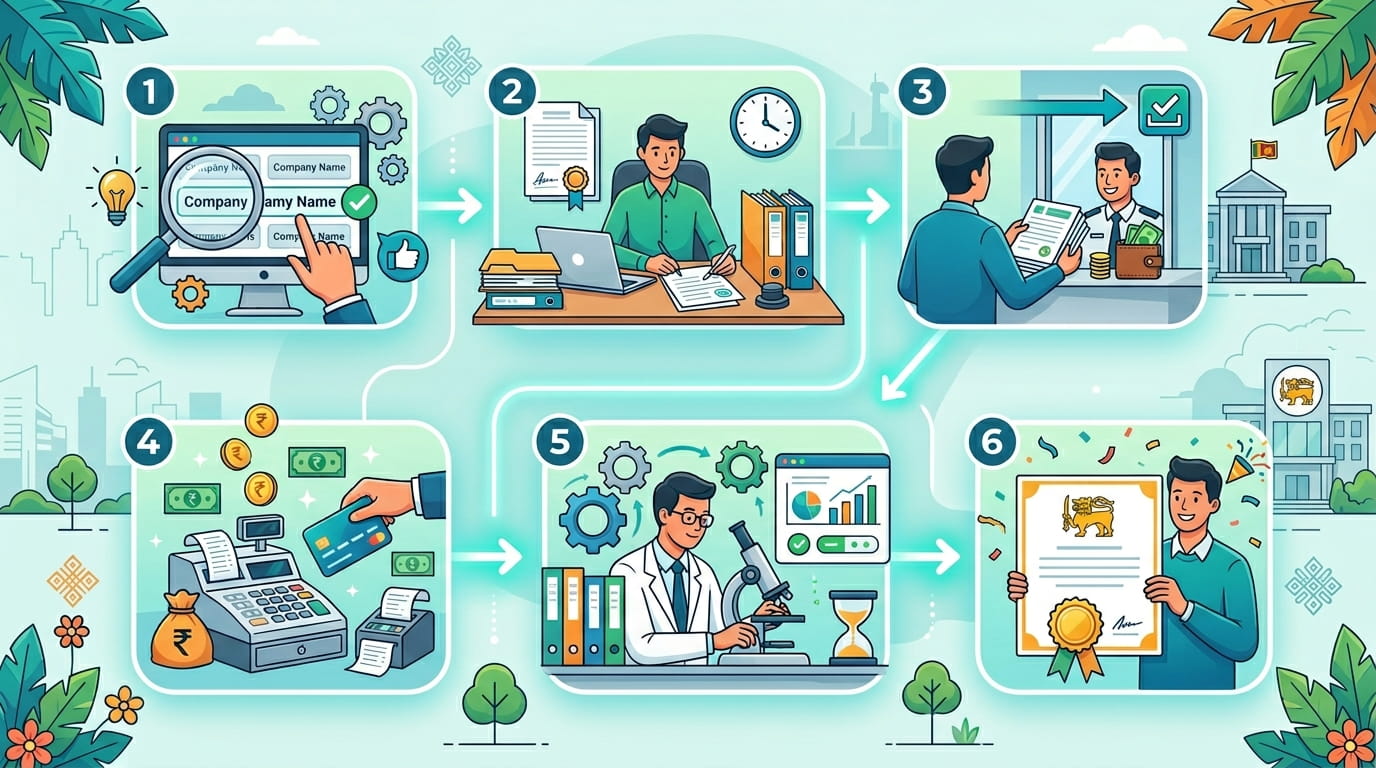
📋 Step-by-Step Business Registration Process
✅ Step 1: Choose a Business Name
Select a unique name for your business and check availability with the Registrar of Companies.
Tips:
Avoid names similar to existing businesses
Keep it simple and memorable
📝 Step 2: Reserve the Business Name
Submit a name reservation application. Once approved, the name will be reserved for a limited period.
📄 Step 3: Prepare Required Documents
You will need:
NIC copies of owners/directors
Address details
Business activity description
For companies, additional documents such as Articles of Association may be required.
🏢 Step 4: Submit Registration Application
Submit your application along with the required documents to the Registrar of Companies.
📜 Step 5: Obtain Registration Certificate
Once approved, you will receive your business registration certificate. This confirms your business is legally recognized.
💰 Cost of Business Registration (2026)
Costs vary depending on the business type.
Estimated Costs:
Sole proprietorship: LKR 3,000 – 10,000
Private limited company: LKR 15,000 – 50,000+
💡 Tips
Costs may vary based on documentation and services
Using professional services can simplify the process
🏦 Additional Steps After Registration
After registering your business, you should:
1. Open a Business Bank Account
Required for managing finances professionally.
2. Register for Taxes
Depending on your income, you may need to register with the Inland Revenue Department.
3. Obtain Licenses and Permits
Some businesses require approvals from local authorities.
⚠️ Common Mistakes to Avoid
Choosing a name without checking availability
Submitting incomplete documents
Ignoring legal requirements
Not keeping proper records
Avoiding these mistakes can save time and prevent delays.
💡 Tips for Starting a Successful Business
Start with a clear business plan
Understand your target market
Manage expenses carefully
Focus on customer service
🌍 Why Start a Business in Sri Lanka?
Sri Lanka offers several advantages:
Growing economy
Strategic location in South Asia
Expanding digital opportunities
Support for small businesses
🔎 Related Services You May Need
Accounting and bookkeeping services
Legal consultants
Business consultants
Office space and co-working locations
📍 Final Thoughts
Registering a business in Sri Lanka is a crucial first step toward building a successful venture. With the right preparation and understanding of the process, you can complete registration efficiently and focus on growing your business.
Whether you’re starting small or planning a larger company, proper registration ensures credibility, legal protection, and long-term stability.